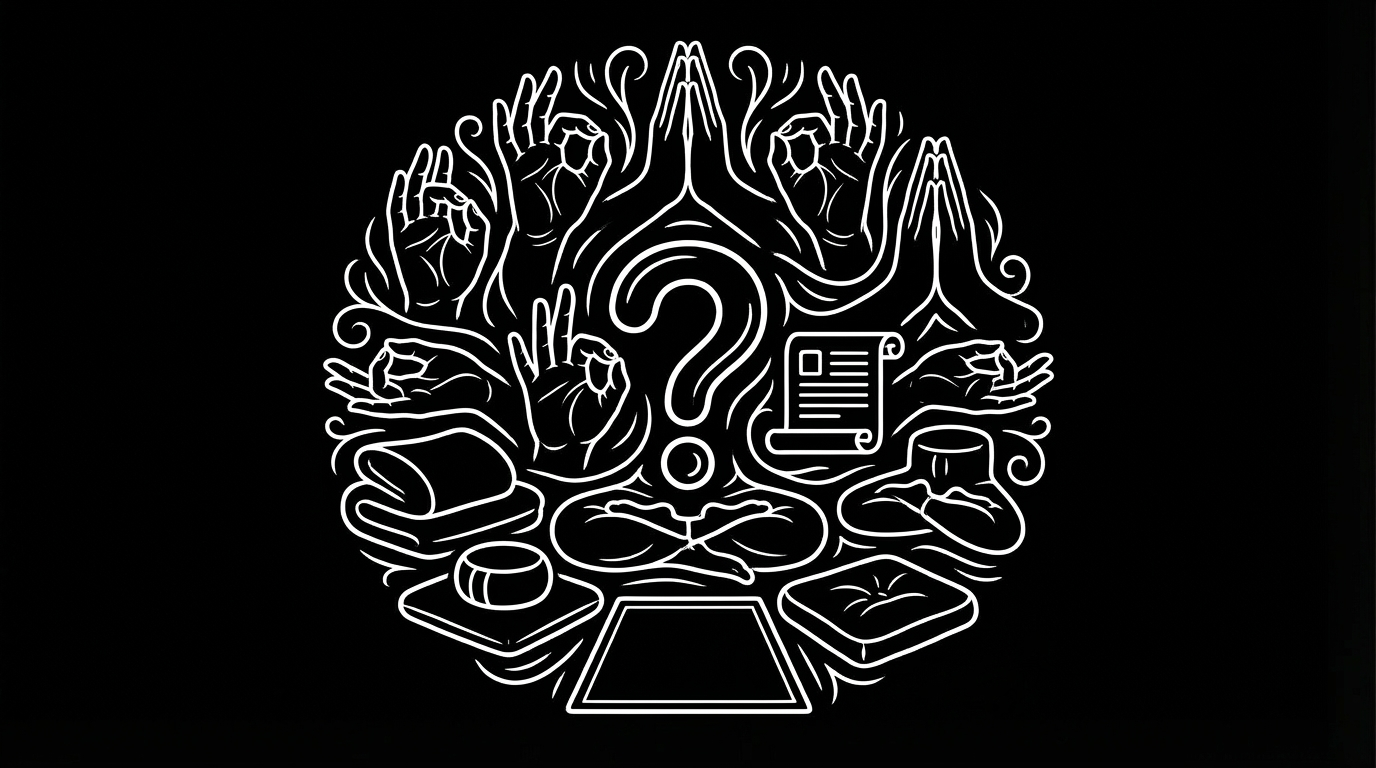
Q&A : Sitting Positions in Meditation
Q. Why does the sitting position matter so much in meditation and Pranayama?
Your sitting posture directly affects breathing capacity, spinal alignment, nervous system regulation, and mental focus. A stable seat allows the breath to move freely and the mind to remain alert without tension. In one to one yoga classes, posture is adjusted precisely to prevent strain and support long term practice.
Q. Is sitting on the floor necessary for meditation?
No. Sitting on the floor is traditional, but not mandatory. What matters is a stable base, an upright spine, and relaxed breathing. Chairs, cushions, or bolsters can be used effectively, especially in private yoga sessions where posture is adapted to the individual body.
Q. Why is an upright spine emphasized in Hatha Yoga and Pranayama?
An upright spine supports efficient breathing and allows energy to circulate evenly. When the spine collapses, breathing becomes shallow and the mind dulls. When it is overly rigid, tension appears. The goal is effortless verticality, which is best learned in personalized yoga instruction.
Q. What is the purpose of Padmasana or full lotus posture?
Padmasana creates exceptional stability and symmetry. It minimizes body movement, grounds the lower body, and supports prolonged meditation. However, it requires open hips and knees and is not suitable for everyone. Forcing lotus can cause injury and should never be rushed.
Q. Is Half Lotus a valid alternative to full lotus?
Yes. Half Lotus provides many of the same benefits with less strain. It is widely used in meditation and Pranayama and is often preferred in private Hatha Yoga classes because it balances stability with accessibility.
Q. What other seated postures are commonly used for Pranayama?
Common alternatives include simple cross legged sitting, kneeling postures, or seated positions supported by props. These variations allow the pelvis to tilt naturally and the spine to rise without effort, making them ideal for long breathwork sessions.
Q. Why is comfort important during meditation?
Discomfort pulls attention outward. When the body is at ease, awareness can turn inward naturally. Comfort does not mean slouching but rather intelligent support. This is why one to one yoga classes are effective, as small adjustments make a major difference.
Q. What is Chin Mudra and why is it used during meditation?
Chin Mudra is formed by touching the tip of the index finger to the thumb while the other fingers extend naturally. It promotes calmness, concentration, and inward awareness. It also supports relaxed breathing by releasing tension in the shoulders and arms. It avoid any energy leak.
Q. Should Chin Mudra be used in all meditation practices?
Not necessarily. Chin Mudra is beneficial for calming and grounding practices. Other hand positions may be used depending on the intention of the session. A private yoga teacher will select mudras based on the desired effect.
Q. What is Vishnu Mudra and when is it used?
Vishnu Mudra is primarily used during alternate nostril breathing. The fingers are arranged to control the nostrils gently, allowing precise regulation of inhalation and exhalation. This mudra helps balance the nervous system and sharpen breath awareness.
Q. Why are hand gestures important in Pranayama?
Mudras influence subtle muscle engagement, nervous system signaling, and mental focus. They are not symbolic gestures alone but functional tools that support breath regulation and concentration during Pranayama.
Q. Can Pranayama be practised without mudras?
Yes. Mudras enhance practice but are not compulsory. Beginners often start without them and introduce mudras later as breath awareness improves. In private yoga classes, mudras are introduced progressively and intentionally.
Q. Should hands always rest on the knees during meditation?
No. Hands can rest on the knees, thighs, or lap depending on comfort and intention. What matters is that the shoulders remain relaxed and the chest open, allowing unrestricted breathing.
Q. Why is symmetry important in seated meditation?
Symmetry reduces muscular compensation and mental distraction. Balanced seating helps maintain stillness and steadiness, which is essential for deeper Pranayama and meditation practices.
Q. Can posture influence mental clarity?
Absolutely. A balanced seat supports alertness without agitation. Poor posture leads to lethargy or restlessness. This is why posture correction is a key element of one to one Hatha Yoga and meditation training.
Q. How long should I remain in a seated position during breathwork?
Duration depends on experience and comfort. Beginners may start with a few minutes, while advanced practitioners can sit much longer. The goal is steadiness without strain, not endurance.
Q. What role do props play in meditation posture?
Props support the pelvis, knees, and spine, allowing relaxation without collapse. Cushions, blocks, and blankets are commonly used in private yoga sessions to tailor posture to the individual body.
Q. Is it normal to adjust posture during meditation?
Yes, especially in the beginning. Over time, as alignment improves and the body adapts, movement naturally decreases. Skilled guidance helps shorten this adjustment phase.
Q. How does seated posture support deeper Pranayama?
A stable seat allows breath to become slow, smooth, and subtle. When the body is aligned, the diaphragm moves freely and breath ratios can be maintained effortlessly, which is essential for advanced Pranayama.
Q. Why is posture instruction best done one to one?
Every body is different. Hip structure, spine shape, and mobility vary widely. One to one yoga classes allow precise adjustments that group classes cannot provide, ensuring safety, comfort, and progress.
Q. What is the biggest mistake people make with meditation posture?
Forcing a traditional shape without respecting their body. True yogic posture is stable, comfortable, and sustainable. When posture serves awareness, meditation becomes natural rather than effortful.