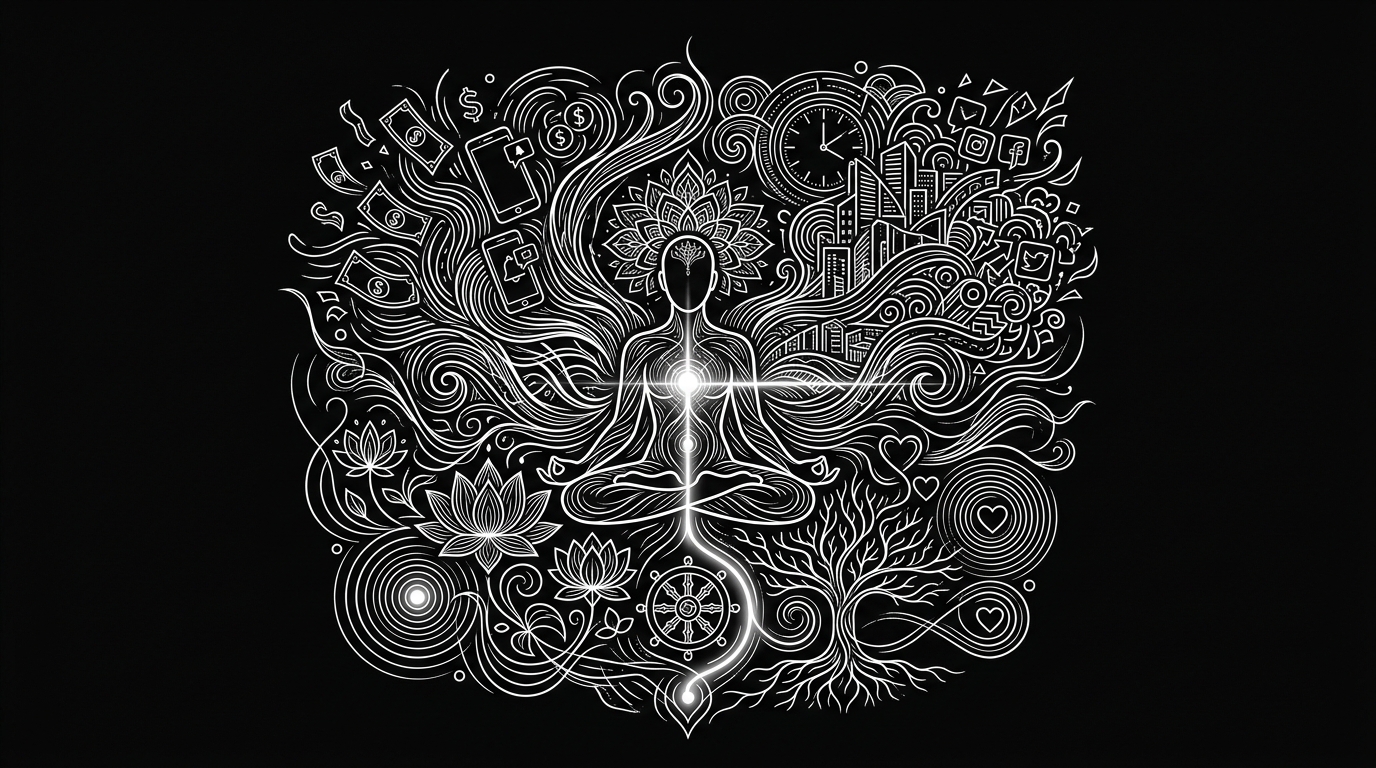
Finding True Meaning Beyond External Distractions
The restlessness you feel, that gnawing sense that something essential is missing from your existence, does not originate from any personal failing. This emptiness stems from a systematic misdirection of human attention toward temporary satisfactions that promise fulfillment yet deliver only fleeting pleasure.
Contemporary culture operates through a sophisticated network of diversions designed to keep consciousness focused outward rather than inward. Each advertisement, each digital notification, each consumer promise whispers the same false teaching: that meaning comes from acquisition, consumption, or external experience.
The Mechanics of Spiritual Misdirection
Understanding how this misdirection operates requires examining the difference between genuine fulfillment and manufactured satisfaction. When you engage with a video game, for instance, the designers have crafted an artificial sense of purpose through quests, achievements, and narrative progression. Your mind experiences a temporary feeling of direction and accomplishment.
Yet the moment you step away from that screen, the constructed meaning evaporates. The quests were not your own. The achievements measured nothing real. The story was not the story of your soul's growth or your contribution to the world's healing.
This same pattern repeats across countless modern offerings. Social media platforms create artificial communities and hollow validation systems. Processed foods trigger pleasure responses while depleting the body's natural intelligence. Each cigarette promises relief while creating greater agitation. Sweet treats offer momentary comfort while disturbing the nervous system's equilibrium.
Recognizing the Pattern of False Fulfillment
I have observed that students often struggle to identify these patterns because they become so normalized. The constant availability of external stimulation makes the contrast with inner stillness feel uncomfortable or even frightening. Yet this discomfort points directly toward what needs attention.
True meaning emerges from being, not having. It grows from your capacity to remain present with what is, rather than constantly seeking what might be. When Patanjali describes yoga as the cessation of fluctuations in consciousness, he points toward this fundamental recognition: fulfillment comes from settling into your essential nature, not from adding more experiences to an already overstimulated mind.
The spiritual traditions understand that human beings possess an innate capacity for contentment, purpose, and deep satisfaction. This capacity does not depend on external circumstances. It requires cultivation through specific practices and the gradual withdrawal of attention from compulsive seeking.
Practical Steps for Reclaiming Inner Authority
Begin with the simplest possible changes. Remove one source of artificial stimulation from your daily routine. If you habitually reach for sweets when feeling restless, sit instead with the restlessness itself. Notice what happens in your body and mind when you do not immediately satisfy the craving.
This is not about harsh restriction or punitive denial. Rather, it creates space for authentic impulses to emerge. When you stop filling every moment with external input, you begin to hear the quieter voice of genuine desire and natural wisdom.
The elimination of cigarettes, processed sugars, excessive digital entertainment, and other compulsive habits serves a specific yogic purpose. Each time you choose conscious non-action over automatic reaction, you strengthen what the tradition calls viveka, or discriminative wisdom. You begin to distinguish between what truly nourishes and what merely agitates.
The Role of Simplicity in Spiritual Development
Simplicity functions as both method and result in spiritual practice. By reducing external complexity, you create conditions where inner richness can reveal itself. This process requires patience because the mind has become accustomed to constant stimulation.
I notice that when students first attempt to reduce their consumption of digital media or processed foods, they often experience what feels like boredom or emptiness. This temporary discomfort marks the beginning of real spiritual work. The emptiness is not actually empty; it contains all the authentic impulses and genuine interests that have been obscured by artificial stimulation.
Swami Sivananda taught that true happiness is our natural state, not something to be achieved through effort or acquisition. When you remove the obstacles to natural contentment, that contentment reveals itself spontaneously. The obstacles are primarily habits of seeking satisfaction outside yourself.
Understanding Internal vs External Orientation
The shift from external to internal orientation requires understanding the difference between pleasure and fulfillment. Pleasure depends on specific conditions and inevitably changes when those conditions change. Fulfillment emerges from alignment with your deeper purpose and values, independent of circumstances.
This distinction becomes clear through direct experience. Notice how you feel after consuming entertainment versus after spending time in quiet reflection or meaningful activity. Observe the quality of energy after eating processed foods compared to simple, fresh meals. Track your mental state after hours of social media scrolling versus time spent in nature or creative work.
These comparisons are not meant to create guilt or rigid rules, but to develop sensitivity to how different choices affect your inner state. The yogic approach emphasizes direct observation over imposed beliefs.
The Gradual Path of Inner Reclamation
As you experiment with reducing external dependencies, you may discover interests and capacities that have been dormant. Perhaps you feel drawn to creative expression, physical movement, or quiet contemplation. These authentic impulses often emerge slowly because they have been overshadowed by louder, more immediately gratifying options.
The process resembles training attention in meditation practice. Initially, the mind feels scattered and seeks distraction. With gentle persistence, periods of natural focus and clarity begin to emerge. Eventually, this focused awareness becomes more appealing than the scattered state.
Similarly, as you reduce reliance on artificial sources of meaning and stimulation, your natural capacity for purpose and satisfaction gradually strengthens. You begin to find genuine interest in activities that serve something beyond personal pleasure: creative work that expresses authentic vision, relationships based on mutual growth rather than entertainment, physical practices that cultivate strength and awareness rather than mere appearance.
Rediscovering Your Essential Purpose
The tradition teaches that each individual possesses a unique contribution to make in this lifetime. This contribution cannot be discovered through external seeking because it emerges from your particular combination of capacities, inclinations, and circumstances. It reveals itself only when you create sufficient inner stillness to perceive subtle guidance.
This guidance often appears not as dramatic revelation but as quiet attraction toward certain activities or ways of being. You might find yourself drawn to helping others learn something you understand well, or to creating beauty in some form, or to serving those who are suffering. These authentic impulses feel different from socially programmed ambitions because they emerge from inner fullness rather than inner lack.
The spiritual path involves learning to trust these subtle internal signals over the louder demands of cultural conditioning. This trust develops through practice and direct experience of following authentic impulses versus manufactured desires.
When you organize your life around these genuine callings rather than external pressures or artificial rewards, you discover what the traditions call dharma: right action that emerges from understanding your place in the larger whole. This alignment creates a sense of meaning that does not depend on external validation or reward.
The simplicity of this approach can be surprising. Step away from what creates agitation without adding genuine value. Create space for what emerges naturally from this clearing. Trust the process of inner revelation over external instruction about what should fulfill you. Through these basic practices, the profound question of purpose begins to answer itself from within.