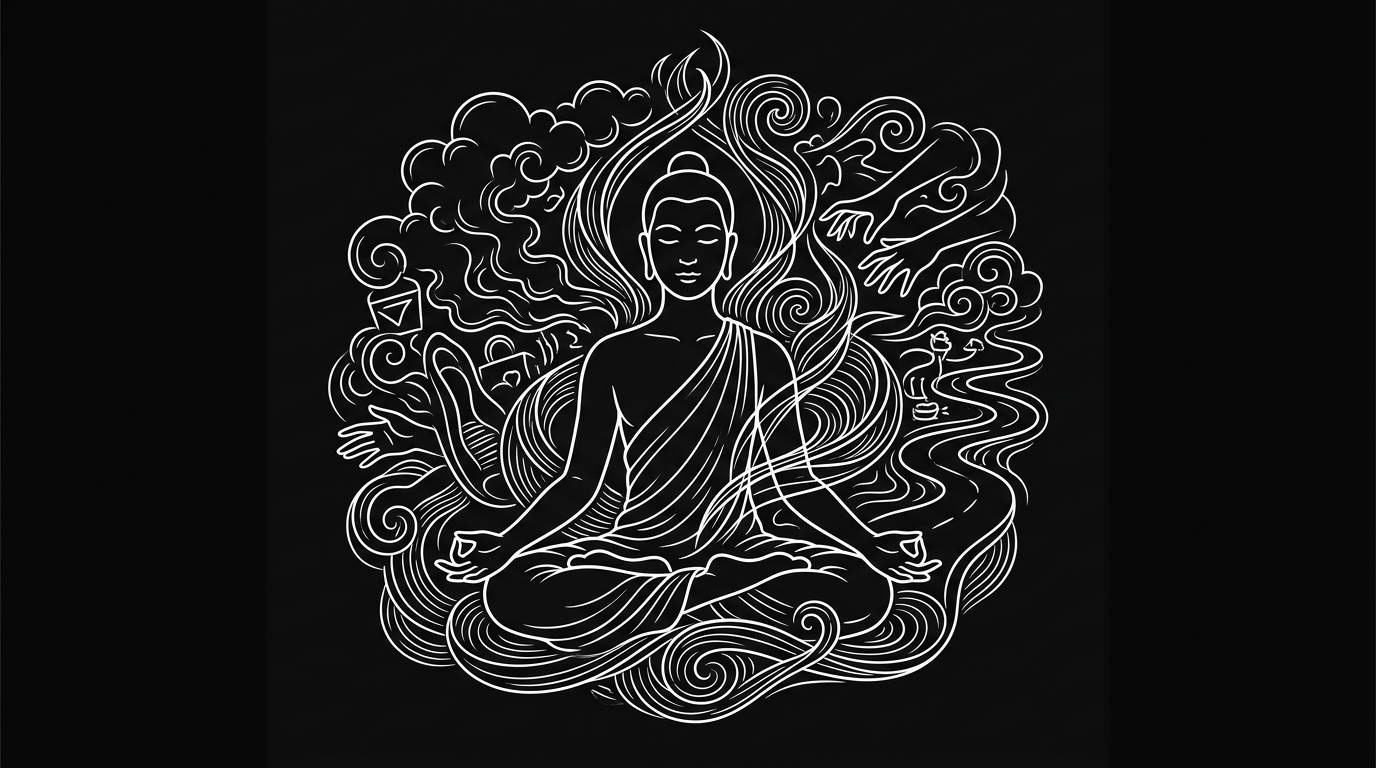
Spiritual Development Through Non Attachment
The advertisement boards surrounding us reveal something profound about the state of collective consciousness. When I observe the messages flooding our visual field, betting applications, alcoholic beverages, cosmetic products, fast food chains, I see a mirror reflecting exactly where our attention rests as a society.
These companies invest enormous resources in billboard space not because they are forced to, but because their methods produce results. We respond to these visual triggers. We click. We purchase. We participate in the cycle they have designed to capture our awareness.
Yet the billboard itself is not the enemy. The external advertisement serves as a precise indicator, showing us the current state of our inner landscape. The pull we feel toward these offerings reveals the areas where attachment still governs our responses.
The True Meaning of Spiritual Work
In 2026, authentic spiritual development means cultivating the capacity to encounter these triggers and experience no internal pull whatsoever. This is the actual work we must undertake. The ability to witness external stimulation while maintaining complete inner equilibrium represents genuine spiritual maturity.
When Patanjali speaks of vairagya or non-attachment in the Yoga Sutras, he points toward this very state. The practice is not about avoiding the world or hiding from its offerings. Rather, it involves developing such inner stability that external circumstances cannot disturb our fundamental peace.
I have noticed that many students misunderstand this concept initially. They believe spiritual practice means rejecting material things or judging those who engage with them. This approach misses the essential point entirely.
Becoming Someone Who Needs Nothing
The transformation occurs when we become individuals who genuinely do not require what these advertisements promise. This is not suppression or denial. It is a natural result of inner fulfillment that makes external validation unnecessary.
Consider the person who has discovered deep contentment through spiritual practice. Such a person might see an advertisement for luxury goods and feel absolutely nothing. No desire arises. No sense of lacking appears. The image passes through their awareness like a cloud moving across an empty sky.
This state cannot be forced or manufactured through willpower alone. It emerges gradually as we address the root causes of craving within our consciousness.
Understanding the Mirror
The external world functions as a perfect reflection of our internal state. When we feel drawn to acquire something advertised, we can use this response as valuable information about our current level of attachment.
Rather than fighting the desire or judging ourselves for having it, we can observe it with the same detachment we would apply to studying any other natural phenomenon. What is this craving telling us about our inner condition? Where do we still believe that external things can provide lasting satisfaction?
Swami Sivananda taught that every experience serves the purpose of spiritual education when we approach it with proper understanding. The advertisement that triggers desire becomes a teacher, showing us exactly where our practice needs attention.
The Practice of Inner Observation
Begin by noticing your responses to external stimuli throughout the day. When you encounter an advertisement, observe what happens in your mind and body. Does energy move toward acquisition? Does a sense of wanting arise?
This observation must be conducted without judgment. You are simply gathering data about the current state of your consciousness. The goal is not to immediately eliminate all desires, but to become increasingly aware of how they operate.
Freedom from the Pull
True spiritual advancement reveals itself in moments when we can walk past any trigger and feel nothing disturbing our inner equilibrium. This is not indifference or emotional numbness. It is a profound state of inner completeness that requires nothing from the external world for its maintenance.
Such freedom develops through consistent practice over time. Meditation, pranayama, and the study of spiritual texts all contribute to this growing inner stability. As we establish ourselves more firmly in our essential nature, the pull of external objects naturally diminishes.
The person who has achieved this state does not avoid billboards or advertisements. They simply remain unaffected by them. They can engage with the world fully while maintaining complete inner independence.
Practical Application
When you next encounter advertising that creates internal movement, pause and examine the experience. What promise does this advertisement make? What do you believe this product or service will provide? How does your body respond to the visual stimuli?
Use these moments as opportunities for self-inquiry rather than automatic reaction. Ask yourself what you are truly seeking through external acquisition. Usually, we discover that we want feelings like security, pleasure, acceptance, or control.
Once we identify these underlying desires, we can address them through spiritual practice rather than consumer activity. Meditation can provide the peace we seek. Service to others can fulfill our need for connection. Self-inquiry can reveal the security that already exists within our true nature.
The Gradual Transformation
This transformation does not happen overnight. I have observed that it occurs through gradual shifts in our relationship to desire itself. We begin to notice the gap between the promise of satisfaction and the actual experience of acquisition.
Over time, we recognize that external objects cannot provide lasting contentment. This recognition is not intellectual but experiential. We feel it in our bones. We know it through repeated observation of our own responses.
Beyond Personal Liberation
As individual practitioners develop this capacity for non-attachment, the collective consciousness begins to shift. Fewer people respond to manipulative advertising. Companies must adapt their approaches. The mirror begins reflecting a different state of awareness.
This is how spiritual practice contributes to broader social transformation. We change ourselves first, and this change ripples outward into the world around us.
The billboards themselves may not disappear immediately, but their power to disturb our inner peace diminishes completely. We become living examples of what is possible when human consciousness is no longer driven by external triggers.
Eventually, if enough individuals achieve this state of inner freedom, the content of public messaging will naturally evolve to reflect higher values and aspirations. The mirror will show us a society that has discovered sources of fulfillment beyond material accumulation.
This is the actual meaning of spiritual development in our contemporary context. Not escape from the world, but complete freedom within it. Not rejection of material existence, but liberation from its compulsive demands on our attention and energy.